
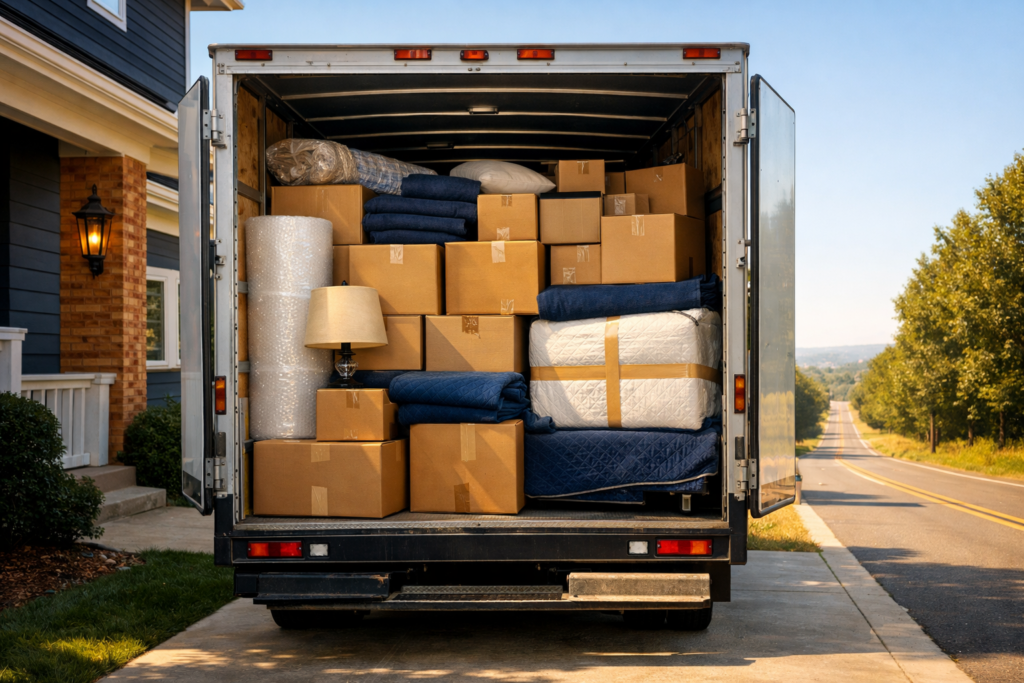
Auckland Fast Movers handles enough intercity relocations to know which parts of a long-distance move actually cause problems and which ones just feel stressful at the time.
Long-distance moving tips matter more the further the trip goes, since a small packing mistake or a missed logistics detail is much harder to fix once the truck is already on the road.
What works well for a move across town can become a problem over several hours of driving.
A bit of planning upfront turns a multi-hour move into a manageable process rather than a scramble on the day.
The Complex Logistics of Long-Distance Intercity Relocations
Moving within the same city and moving between cities are different problems. Distance adds fuel time, route planning, and far less room to fix mistakes along the way.
Regional relocation logistics also include variables such as ferry timetables, weather delays, and site access at both ends of the trip.
A move that looks straightforward on a map can still run into delays if you don’t account for one of these variables early.
Phase 1: Strategic Inventory Condensation and Aggressive Decluttering
Every item that makes the trip adds weight, time, and cost, so this is where the biggest savings usually occur.
The Financial ROI of Purging Unwanted Items Before Calculating Transit Volume Weight
Long-distance quotes are usually based on volume or weight, so cutting unused items before the quote is calculated can meaningfully reduce the final cost. It’s worth doing this sort before requesting a quote, not after.
Hosting Estate Sales or Utilising Regional Sustainable Recycling Centres Profitably
A weekend garage sale or a drop at a local recycling centre can turn unwanted furniture into either cash or one less thing to pack, transport, and unpack later.
Either option beats paying to move something that won’t get used again.
Phase 2: Advanced Packing Methods for Multi-Hour Freight Routes
Longer trips mean more time on the road, more handling, and more chances for something to shift or knock against something else.
Auckland Fast Movers sees far fewer damage claims on trips where packing has been done with this in mind from the start.
Heavy-Duty Double-Walled Cartons vs Standard Grocery Boxes
Double-walled cartons hold their shape far better over a multi-hour trip than reused grocery boxes, which tend to soften and collapse under sustained weight.
The extra layer of board also gives better protection against knocks during loading and unloading at both ends of the trip.
The Art of Void Interspace Cushioning
Gaps inside a box let items shift and knock together over a long trip. Packing paper, bubble wrap, or foam sheets to fill these gaps is essential for safely packing fragile cargo.
Creating a Day-One Survival Pack for Your Arrival Evening
Pack a separate bag with toiletries, chargers, a change of clothes, and anything else needed before the rest of the boxes are unpacked. This one bag makes the first night in a new place far less stressful.
Phase 3: Coordinating Logistics and Transit Inventory Management
Keeping track of what’s on the truck matters more over long distances, where boxes might be loaded and unloaded multiple times.
Using a Master Numbering System to Label Every Box
Number each box and keep a simple list of its contents against each number. This makes it far easier to confirm everything has arrived at the other end.
It also speeds up unpacking, since boxes can be directed straight to the right room instead of being opened one by one to figure out what’s inside.
Verifying Regional Road Conditions, Ferry Crossings, and Site Truck Clearances
Check road conditions, any ferry crossing schedules, and whether the truck can actually access both properties. A narrow driveway or a missed sailing can delay the whole move.
This is especially relevant for moves crossing the Cook Strait, where sailing schedules and weather can affect timing more than road travel alone.
Securing Professional Transit Indemnity Insurance Protection
Insurance matters more on longer trips, simply because there’s more time and handling involved between pickup and delivery. It’s worth confirming exactly what’s covered before move day.
Auckland Fast Movers offers movers’ insurance as part of its long-distance service, giving some financial protection if something is damaged in transit despite careful handling.
For moves between cities, the intercity moving service in Auckland covers planning, packing, and transport as part of one coordinated booking, working from a clear, stress-free moving checklist.
Frequently Asked Questions
A few questions people often ask before booking a long-distance move.
What type of specialty packing material is required to protect fine crystal glassware across intercity roads?
Individually wrap each piece in packing paper, then cushion it further with bubble wrap, and place it in a sturdy, well-padded box rather than a standard carton.
Should I completely empty the heavy bedroom chest drawers before long-distance transit trucks load them?
Yes, for most drawers. Heavy or loose contents can shift during a long trip and stress the drawer runners, so lighter items only, or fully emptied, is the safer approach.
How do professional removalists manage furniture safety through rough inter-island ferry sailings?
Furniture is typically secured with straps and padding before the crossing, since ferry sailings can involve more movement than standard road travel. Crews plan loading order around these factors to keep bulky items stable.
How far in advance should a homeowner secure their booking date for a long-distance move?
Booking three to six weeks ahead is a reasonable target, especially around school holidays or month-end, when demand for long-distance movers tends to peak.